Why planes dump fuel before landing

Updated: May 17
When people hear that airplanes sometimes “dump fuel” before landing, it can sound alarming or wasteful. In reality, it’s a carefully controlled safety procedure used only in specific situations. Understanding why this happens requires a look at how aircraft are designed and how pilots manage emergencies.
The Weight Problem
Aircraft are built with strict weight limits. Two of the most important are:
Maximum takeoff weight (MTOW) – the heaviest the plane can be when it leaves the ground
Maximum landing weight (MLW) – the heaviest it can be when it safely touches down
The key detail is that MLW is usually significantly lower than MTOW. This is because landing places intense stress on the landing gear, wings, and fuselage. A heavier aircraft hits the runway harder and requires more braking force, increasing the risk of structural damage or tire failure.
On long flights, planes take off with large amounts of fuel. If a problem occurs shortly after departure—such as a mechanical issue, medical emergency, or bird strike—the aircraft may need to return to the airport quickly. But at that point, it’s still carrying most of its fuel and may be too heavy to land safely.
Why Dump Fuel?
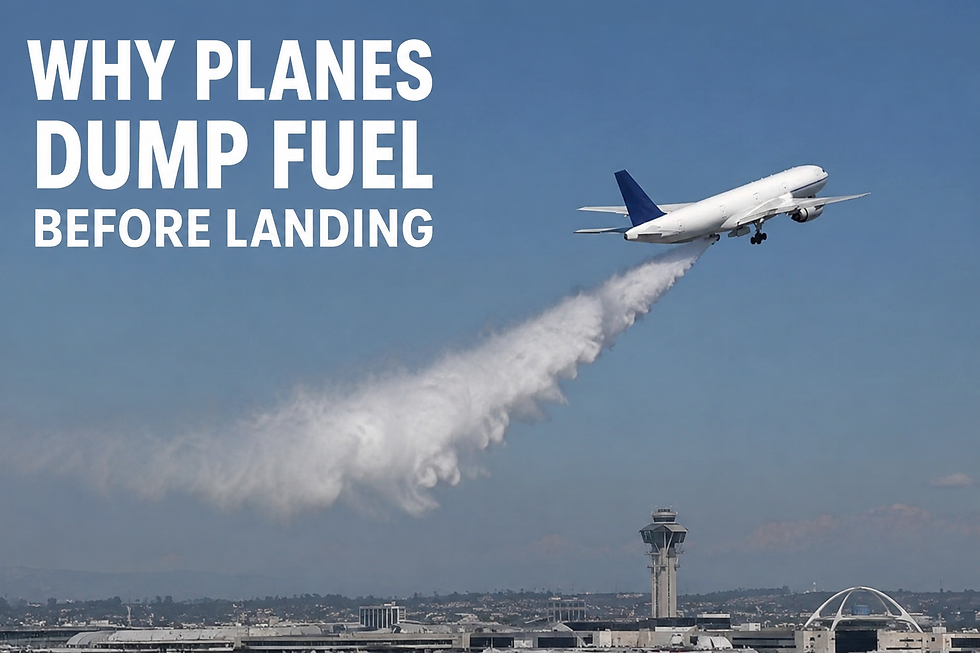
Fuel dumping (also called fuel jettisoning) allows the aircraft to reduce weight rapidly so it can land within safe limits. Without this option, pilots would have two alternatives:
Hold in the air and burn fuel (which can take hours)
Land overweight, which is sometimes possible but increases risk and usually requires inspections afterward
In urgent situations, time matters. Dumping fuel lets pilots prepare for landing much faster.
How It Works
Not all aircraft can dump fuel. It’s typically a feature of larger, long-haul airplanes. When activated, fuel is released through nozzles near the wings, dispersing into a fine mist.
This process is done at high altitudes and speeds, where the fuel evaporates before reaching the ground. Air traffic control coordinates the procedure to ensure it happens in designated areas away from populated zones whenever possible.
Environmental and Safety Considerations
Fuel dumping is rare and tightly regulated. Pilots don’t use it casually—it’s reserved for situations where safety is the priority. While some fuel may not fully evaporate, the environmental impact is considered minimal compared to the risks of an unsafe landing.
Additionally, aviation authorities require airlines to follow strict guidelines about where and how fuel dumping can occur, minimizing any potential harm.
Not Always Necessary
It’s worth noting that not every emergency leads to fuel dumping. Pilots may:
Burn fuel by flying in holding patterns if time allows
Land overweight if the situation is critical and the aircraft can structurally handle it
Modern aircraft are also designed to tolerate certain overweight landings, though this often leads to precautionary inspections afterward.
The Bottom Line
Fuel dumping isn’t wasteful or reckless—it’s a precautionary safety measure. When used, it helps ensure that an aircraft can land safely without exceeding structural limits. Though it may sound dramatic, it reflects the aviation industry’s strong emphasis on minimizing risk and protecting passengers, crew, and aircraft alike.


Comments